Music has always been one of the most powerful tools for early childhood development. From soothing lullabies to playful nursery rhymes, sound shapes the way children understand the world around them. Kids Piano 3D by Noodle Kidz brings that world of sound into children’s hands in a fun, colorful, and interactive way. By introducing young learners to musical instrument sounds, guided piano play, creative free play, and even animal sounds, the app supports cognitive growth, creativity, and confidence—all while keeping learning joyful.
Learning Instrument Sounds from a Young Age
One of the most important foundations in early childhood education is sensory exposure. When children hear different musical instruments—such as piano, xylophone, drums, guitar, bongo, and maraca—they are not just listening for fun. They are building auditory discrimination skills.
Auditory discrimination helps children recognize differences between sounds. For example, the sharp, bright tone of a xylophone is very different from the deeper rhythm of a drum. When children repeatedly hear and experiment with these sounds, they begin to:
- Identify sound patterns
- Distinguish pitch and tone differences
- Develop stronger listening skills
- Improve memory through sound recognition
These skills directly support language development. Music and language share similar brain pathways. When children learn to differentiate instrument sounds, they are also strengthening the neural networks used to distinguish letters and words later in reading.
Early exposure to musical sounds also builds curiosity. A child may begin by tapping a drum sound, then switch to guitar, and notice how each produces a unique feeling. This exploration nurtures creativity and open-minded thinking from an early age.
Following Light-Up Piano Keys to Learn Songs
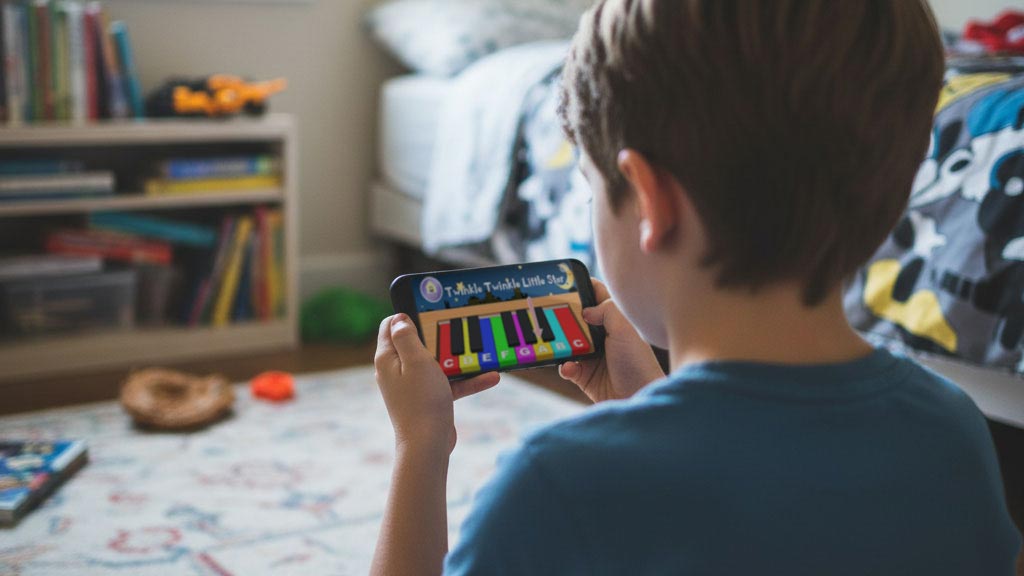
One of the standout features of Kids Piano 3D is the guided learning mode where lights appear on the piano keys to show children which note to press. This approach offers several developmental benefits.
First, it introduces structured learning in a stress-free way. Instead of overwhelming children with sheet music or formal instruction, the light guidance makes learning intuitive and visual. Children follow the glowing keys, connect the visual cue to the physical action, and immediately hear the result. This reinforces cause-and-effect understanding.
Second, learning nursery rhymes through guided lights supports:
- Pattern recognition
- Sequencing skills
- Hand-eye coordination
- Fine motor development
When a child follows a sequence of lit keys, they are practicing memory and timing. Nursery rhymes are especially helpful because their melodies are familiar and repetitive. This repetition builds confidence. When children successfully play a recognizable song, they feel proud and motivated to continue learning.
Additionally, guided play strengthens focus and attention span. Completing a short song requires concentration. Each time a child finishes a melody, they practice staying engaged in a task—an important skill for school readiness.
The Importance of Free Play and Experimentation
After learning through guided lights, the transition to free play is essential. Free play encourages creativity, independence, and experimentation.
In free play mode, children are no longer following instructions. They are exploring. They might press random keys, create patterns, repeat sounds they enjoy, or invent their own “songs.” This kind of open-ended play has powerful developmental benefits:
- Encourages creative thinking
- Builds problem-solving skills
- Develops confidence through self-expression
- Promotes emotional exploration
Music is one of the safest and healthiest ways for children to express emotions. Even very young children can communicate excitement, calmness, or curiosity through the way they tap keys or switch instruments. Free play allows them to explore sound without judgment or pressure.
When children alternate between structured learning (light-up guidance) and unstructured exploration (free play), they build both discipline and creativity—a balanced approach that supports long-term learning habits.
Recognizing Animal Sounds Through Play
Kids Piano 3D also introduces animal sounds, which may seem like simple entertainment but offer important educational value.
Recognizing animal sounds supports early language development. When children hear a “moo” and connect it to a cow, or a “roar” to a lion, they are strengthening sound-to-meaning associations. These associations are foundational for vocabulary building.
Animal sounds also enhance:
- Memory recall
- Categorization skills
- Environmental awareness
- Imaginative storytelling
Children often love pretending to be animals. When they hear and replay animal sounds, they may create stories or role-play scenarios. This imaginative engagement stimulates creativity and social-emotional development.
Furthermore, recognizing animal sounds improves auditory memory. The more children practice distinguishing between sounds, the stronger their listening comprehension becomes.
Brain Development Benefits of Learning Piano Through an App
Research consistently shows that early musical engagement positively impacts brain development. Even informal musical play—like tapping piano keys on a digital app—activates multiple areas of the brain simultaneously.
When a child plays piano in Kids Piano 3D, several brain functions are engaged:
- Motor Skills – Pressing keys develops fine motor coordination and finger control.
- Visual Processing – Following light-up cues strengthens visual tracking.
- Auditory Processing – Hearing tones builds sound recognition and pitch awareness.
- Memory – Repeating songs reinforces short-term and working memory.
- Emotional Regulation – Music can calm or energize, helping children manage feelings.
Playing piano, even digitally, encourages bilateral coordination—using both hands in a coordinated way. This strengthens connections between the left and right hemispheres of the brain. Stronger hemispheric communication supports problem-solving, reasoning, and creativity.
Music practice also enhances neural plasticity. The young brain is highly adaptable. Repeated exposure to music helps form and strengthen neural pathways that support learning in other academic areas, including math and reading.
Building Confidence and Independence
One often overlooked benefit of music apps is the boost in self-confidence. When children learn a song independently, they feel accomplished. This sense of achievement encourages perseverance.
Because Kids Piano 3D allows children to:
- Learn with guidance
- Experiment freely
- Switch between instruments
- Explore animal sounds
They feel in control of their learning. Autonomy builds intrinsic motivation. Instead of being told what to do, children discover sounds and melodies on their own terms.
Small successes—like completing a nursery rhyme or identifying an animal sound—build positive reinforcement loops. Over time, this strengthens resilience and willingness to try new challenges.
A Safe Introduction to Music Education
Traditional music lessons can be intimidating or expensive for young children. An interactive piano app offers a gentle introduction without pressure.
Children can explore music at their own pace. There is no fear of mistakes. If a wrong key is pressed, it simply produces a different sound—often encouraging more curiosity instead of frustration.
This relaxed learning environment helps children associate music with joy rather than stress. When learning feels like play, children are more likely to continue engaging with it long term.
Supporting Overall Development
Through instrument exploration, guided light-up songs, free creative play, and animal sound recognition, Kids Piano 3D supports multiple areas of development:
- Cognitive development through pattern and memory training
- Motor development through finger coordination
- Language development through sound recognition
- Emotional development through musical expression
- Creative development through improvisation
Most importantly, it makes learning fun.
When children experience music as play, they develop a lifelong appreciation for sound, rhythm, and creativity. Early musical exposure builds strong neural foundations that benefit academic learning, emotional intelligence, and self-expression.
Kids Piano 3D by Noodle Kidz offers more than simple entertainment—it provides an engaging, interactive way for children to explore music, build confidence, and support healthy brain development from a young age. Through joyful exploration of sounds, songs, and imagination, children take their first steps into the wonderful world of music in a way that feels natural, safe, and exciting.