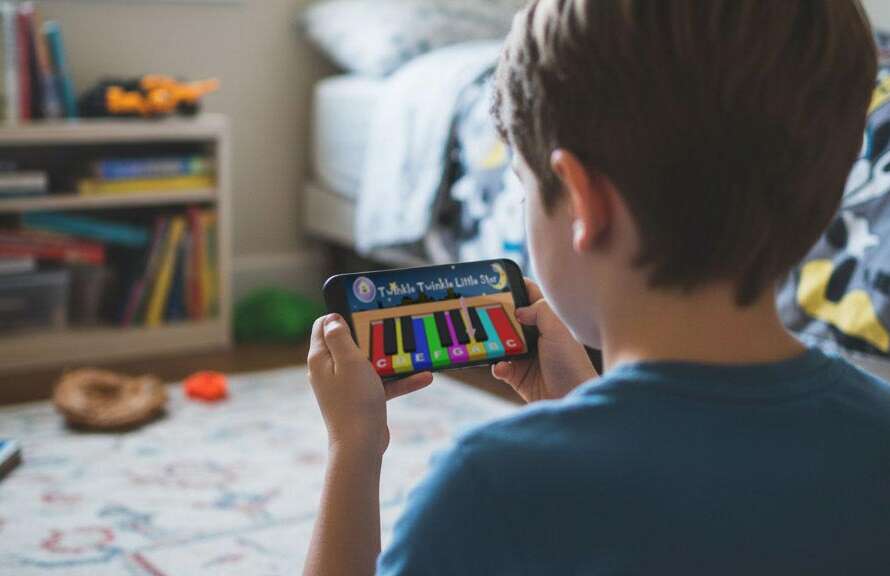
Children with autism often experience the world in a way that is beautifully unique—but also deeply challenging. One of the most common and misunderstood behaviors associated with autism is the meltdown or tantrum. While tantrums in typically developing children are often linked to testing boundaries or seeking attention, in children with autism they are frequently rooted in something far more complex: difficulty with communication, transitions, and emotional regulation.
This Autism Transition App was created with this understanding at its core. By using structured visual supports like first-then cards, emotion emoji selections, and choice-based communication cards, the app addresses one of the most scientifically supported causes of autistic distress: communication breakdown.
The Science Behind Tantrums in Children with Autism
To understand how tools like the Autism Transition App can help, we first need to understand why tantrums happen.
For many children with autism spectrum disorder (ASD), communication is not just delayed—it may be fundamentally different. Research shows that many autistic children experience challenges in:
- Expressive language (saying what they want)
- Receptive language (understanding what others say)
- Pragmatic language (using language socially)
- Nonverbal communication (gestures, facial expressions)
When a child cannot effectively communicate a need, discomfort, or preference, frustration builds. This frustration activates the stress response system in the brain.
The Neurological Stress Response
The brain’s amygdala plays a central role in detecting threats and triggering emotional reactions. Studies have shown that some individuals with autism have heightened amygdala reactivity. When expectations suddenly change or communication fails, the brain may interpret the situation as overwhelming or threatening.
At the same time, the prefrontal cortex—responsible for regulation, impulse control, and flexible thinking—may struggle to balance that emotional surge. This imbalance can lead to:
- Crying
- Screaming
- Throwing objects
- Self-injurious behaviors
- Shutdown or withdrawal
Importantly, these behaviors are rarely manipulative. They are often signs of overload.
Why Transitions Are Especially Difficult
Transitions are one of the biggest triggers for meltdowns in children with autism.
A transition requires:
- Ending one activity
- Shifting attention
- Adjusting expectations
- Beginning something new
This requires cognitive flexibility—a skill that is often more challenging for autistic children due to differences in executive functioning.
Uncertainty is stressful. When a child does not know what is coming next, the brain cannot predict the outcome. Predictability reduces anxiety; unpredictability increases it.
This is where structured visual systems become powerful tools.
The Power of First-Then Cards

The first-then strategy is rooted in Applied Behavior Analysis (ABA) principles and visual support systems widely used in autism therapy.
A first-then card presents:
- First: A required or less preferred task
- Then: A preferred reward or activity
For example:
- First: Wash hands
- Then: Cupcake
This simple structure does several scientifically important things:
1. Reduces Uncertainty
By clearly showing what will happen next, the child’s brain no longer has to guess. Predictability lowers anxiety.
2. Builds Cause-and-Effect Understanding
The child learns that completing a task leads to a positive outcome. This strengthens motivation pathways in the brain.
3. Supports Visual Processing Strengths
Many autistic children are strong visual learners. Visual supports are often processed more easily than verbal instructions. Instead of hearing “Wash your hands first,” the child sees it clearly represented.
4. Improves Executive Functioning
Over time, structured transitions help build planning and sequencing skills.
The Autism Transition App digitizes this proven strategy, making it portable, customizable, and always accessible.
Communication Frustration and Emotional Outbursts
Another major scientific cause of tantrums in autism is communication frustration.
Imagine wanting something intensely but not having the words to express it. For non-verbal children, this is a daily reality.
When communication attempts fail repeatedly, the brain experiences stress. Cortisol levels may increase. Repeated stress without successful resolution can condition the child to escalate behaviors because extreme reactions may have been the only way that worked in the past.
This is not intentional misbehavior—it is learned survival behavior.
If throwing an object once resulted in someone understanding their need, the brain stores that strategy.
To reduce tantrums, we must replace frustration-based communication with accessible alternatives.
Helping Non-Verbal Children Express Feelings

The Autism Transition App includes an emoji-based feeling selection system. This may seem simple, but it addresses a critical neurological gap.
Emotional awareness—also called interoception—can be challenging for many children with autism. They may feel discomfort or distress but struggle to identify and label it.
When a child can tap an emoji that represents:
- Happy
- Sad
- Angry
- Tired
- Overwhelmed
They are engaging in emotional labeling. Research shows that labeling emotions reduces amygdala activity and increases prefrontal cortex regulation.
In other words, naming a feeling can calm the brain.
For non-verbal children, selecting an emoji gives them a voice. Instead of escalating into a meltdown, they can visually communicate their internal state.
This reduces frustration for both the child and caregivers.
Choice-Making and Autonomy
Another powerful feature of the app allows children to choose activity cards—such as “Watch TV”—and show them to caregivers.
Choice-making is crucial in reducing behavioral distress.
When children feel powerless, stress increases. Autonomy activates motivation systems in the brain and decreases oppositional behavior.
Providing structured choices does three things:
- Encourages communication instead of protest
- Reduces power struggles
- Builds independence
Instead of crying or grabbing, the child can show the card.
This shift from reactive behavior to proactive communication changes the entire emotional dynamic.
Breaking the Tantrum Cycle
Tantrums often follow a predictable cycle:
- Trigger (unexpected change or unmet need)
- Escalation (communication attempt fails)
- Overload (stress response activates)
- Meltdown (loss of regulation)
- Recovery
Tools like the Autism Transition App intervene at stages 1 and 2.
By providing:
- Clear expectations
- Predictable transitions
- Visual supports
- Emotional labeling tools
- Choice-based communication
The app prevents escalation before the stress response overwhelms regulation systems.
The earlier we intervene, the less likely a meltdown becomes.
Supporting Brain Development Through Structure
Children with autism often thrive with structure and routine. Predictable systems help the brain build stable neural pathways.
When first-then routines are used consistently:
- Anxiety decreases
- Task completion improves
- Emotional regulation strengthens
- Trust increases
Over time, these positive experiences reshape how the child anticipates transitions.
Instead of expecting stress, they begin expecting clarity.
That shift is profound.
Reducing Tantrums Through Communication, Not Control
It is important to emphasize that tantrums in autism are not discipline problems. They are communication problems.
When children cannot communicate:
- Needs
- Preferences
- Feelings
- Discomfort
Behavior becomes the language.
By giving children accessible tools to communicate visually and independently, we reduce the need for extreme behavior.
The Autism Transition App supports this by transforming frustration into structured expression.
Empowering Families and Caregivers
Beyond helping children, tools like this reduce stress for parents and caregivers.
When communication improves:
- Daily routines run more smoothly
- Power struggles decrease
- Emotional bonds strengthen
- Confidence grows on both sides
Parents feel empowered. Children feel understood.
That mutual understanding is one of the most protective factors in emotional development.
A Bridge to Greater Independence
While no app replaces therapy or professional support, digital tools can complement structured intervention.
The Autism Transition App acts as:
- A visual schedule
- A communication bridge
- A transition support tool
- An emotional expression system
Most importantly, it respects the child’s need for predictability, clarity, and autonomy.
Conclusion
Scientific research consistently shows that many tantrums in children with autism stem from communication barriers, difficulty with transitions, and heightened stress responses in the brain.
When we reduce uncertainty, provide visual structure, and empower children to express feelings and preferences, we reduce frustration at its source.
The Autism Transition App by Noodle Kidz is built on these evidence-based principles. By using first-then cards, emotional emoji communication, and choice-based visual tools, it helps children navigate daily life more smoothly.
Less frustration means fewer meltdowns.
More communication means more connection.
And more understanding leads to a calmer, more confident child.
In the end, supporting communication is not just about reducing tantrums—it is about giving every child a voice.